2 Mind-Bending Science Theories About Reality
What if I told you that science suggests our perception of reality might just be a figment of our imagination? Recent research delves into the nature of consciousness and reality, proposing that our experiences could be more like hallucinations than the tangible world we think we perceive. Get ready to challenge everything you thought you knew about existence!
The Nature of Perception and Reality
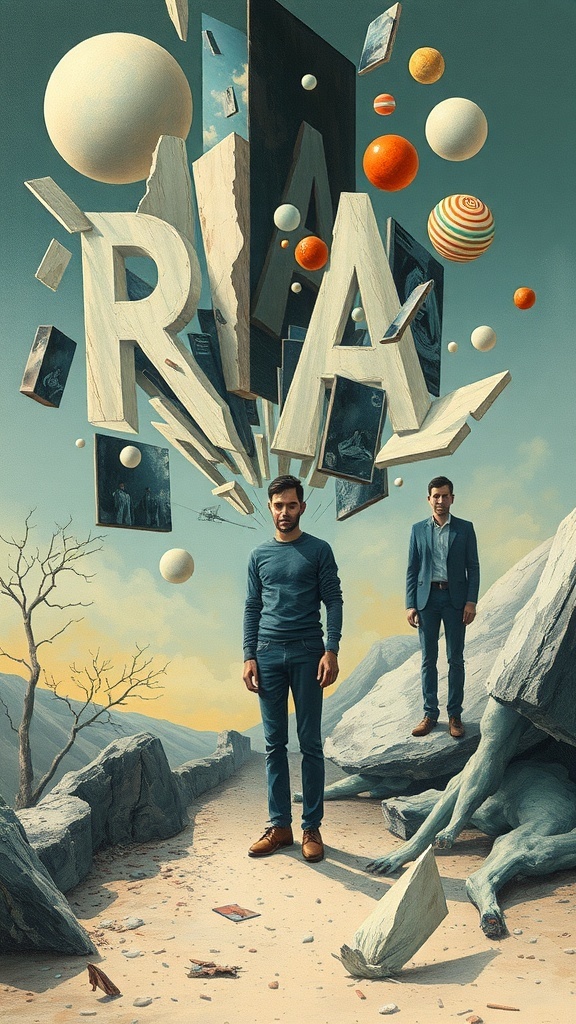
The image captures a thought-provoking scene that reflects the essence of perception and reality. Two figures stand on a rocky path, surrounded by floating elements like planets and images. This surreal setting invites us to question what we see and how we interpret it.
The large letters spelling ‘RIA’ loom above, suggesting that reality is not just what we experience but also how we perceive it. The contrasting figures symbolize different perspectives on existence. One figure appears relaxed, while the other looks more formal, hinting at the varied ways people approach life.
In our daily lives, we often take our perceptions for granted. We assume what we see is the truth. However, science tells us that our senses can be deceiving. Just like the floating objects in the image, our understanding of reality can be influenced by many factors, including our thoughts and emotions.
This image serves as a reminder that reality might be more like a hallucination than we think. It challenges us to look deeper into our perceptions and consider how they shape our understanding of the world around us.
Exploring the Hallucination Hypothesis
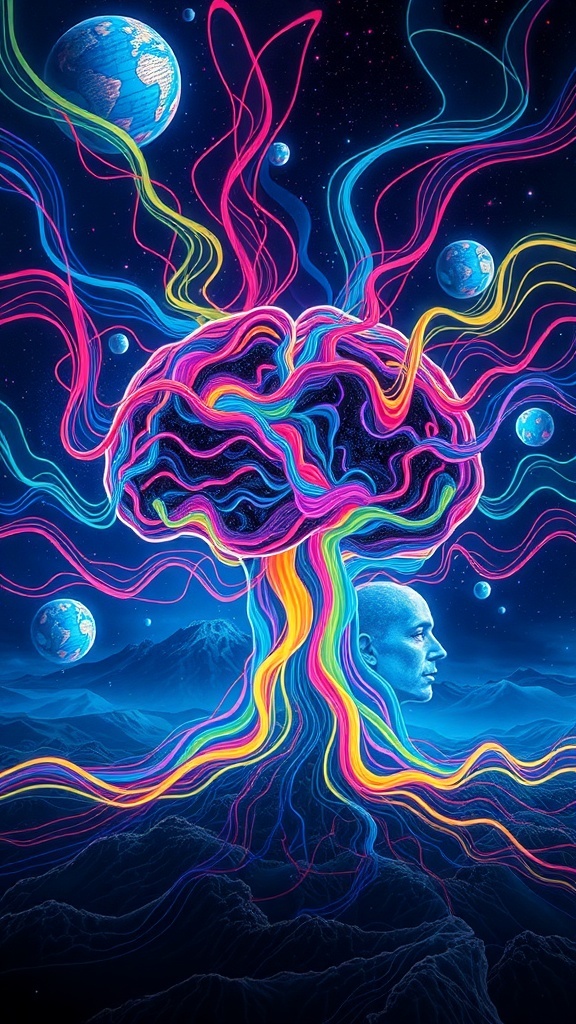
The image captures a vibrant and surreal representation of the mind, resembling a brain intertwined with colorful streams of energy. This visual metaphor highlights the idea that our perceptions may not be as concrete as we think.
The brain, depicted with vivid colors, symbolizes the complexity of human thought and consciousness. The swirling lines suggest that our reality might be a construct, shaped by our experiences and interpretations.
In the background, planets float in a cosmic setting, hinting at the vastness of existence beyond our immediate understanding. This ties into the hallucination hypothesis, which proposes that what we perceive could be mere illusions, influenced by our minds.
As we ponder this concept, it challenges us to rethink the nature of reality. Are we merely experiencing a vivid dream, or is there something more tangible beneath the surface? The image invites us to explore these questions, sparking curiosity about the true essence of our existence.